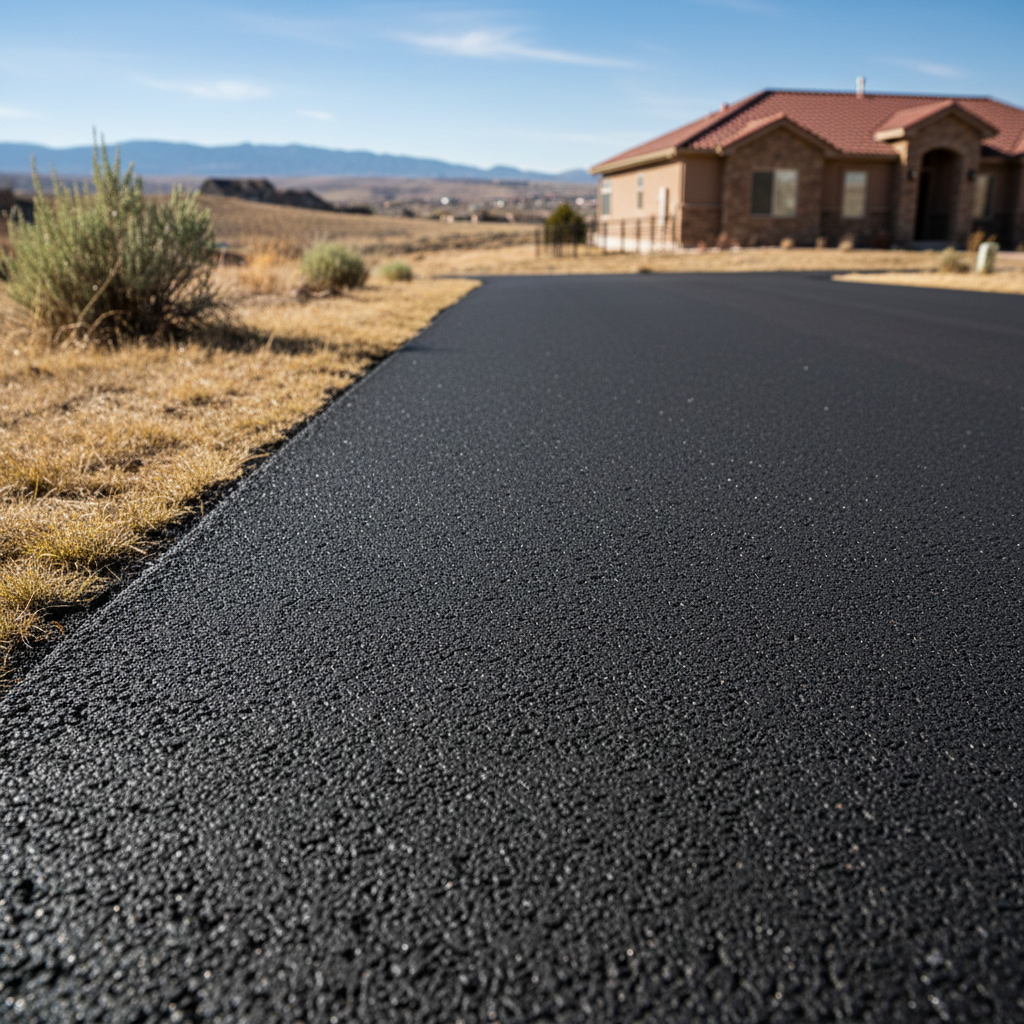
Alright, let's talk residential asphalt. I've been doing this a long time here in Pueblo, and I hear a lot of the same questions from folks trying to figure out what's best for their driveways. Instead of beating around the bush, I'm just going to lay out some honest answers to the stuff you're probably wondering about.
What's the difference between asphalt and concrete for a driveway?
This is a big one, isn't it? You've got two main choices for a hard surface driveway, right? Asphalt and concrete. They're both good, but they're definitely different. Asphalt, or blacktop as some call it, is a flexible pavement. It's made from aggregates—things like crushed rock and sand—bound together with asphalt cement, a petroleum product. It's black, absorbs heat, and stays a bit pliable. Concrete, on the other hand, is rigid. It's a mix of cement, water, and aggregates. Think of it like a big, solid slab.
For driveways, asphalt usually costs less upfront to put in. It's also easier to fix if you get a crack or a pothole; we can patch it pretty seamlessly. Concrete repairs often stand out more, though. Asphalt can get a little soft in extreme heat, which we definitely see here in Pueblo during those scorching summer days. But, it handles our freeze-thaw cycles pretty well because it's flexible. Concrete can crack more severely with ground movement or temperature swings if it's not installed right, and those cracks are tougher to fix without replacing whole sections. It really comes down to what you value: lower initial cost and easier repairs with asphalt, or a more rigid, often lighter-colored surface with concrete that might last longer if perfectly maintained but costs more to fix. Tricky, huh?
How long should a new asphalt driveway last?
If it's put in correctly and you take care of it, a new asphalt driveway should give you a good 15 to 20 years, sometimes even more. That's a solid run. What makes the difference? A lot of it comes down to the base. You can have the best asphalt mix in the world, but if the ground underneath isn't prepped right—properly graded, compacted, and draining well—you're going to have problems sooner rather than later. Here in Pueblo, we've got some clay soils in certain areas that can expand and contract, so a good, stable base is absolutely critical.
Then there's maintenance. Regular sealcoating every few years, fixing small cracks as they pop up, and keeping heavy loads off it (like parking an RV in the same spot for months) will really extend its life. Neglect it, and you'll be looking at repairs or replacement much sooner.
What causes cracks and potholes in my driveway?
Cracks and potholes are the bane of every driveway owner's existence, but they don't just appear out of nowhere. Most of the time, it comes down to water and stress. Water is asphalt's biggest enemy. When water seeps into tiny cracks, and then freezes and expands (which happens plenty here in Colorado), it pushes the asphalt apart, making the cracks bigger. Then, when it thaws, it leaves a void. Repeat that cycle enough times, and you've got a pothole.
Another big factor is the base underneath. If the base isn't stable or if it erodes, the asphalt above it loses support and starts to flex and crack under the weight of vehicles. Heavy vehicles, constant turning in the same spot, or even just the sun's UV rays degrading the asphalt binder over time all chip in. Keeping water out with sealcoating and promptly filling cracks is your best defense.
Can I put a new layer of asphalt over my old, cracked driveway?
Sometimes, yes, you can do an overlay, but it's not always the best solution. An overlay means we're putting a new layer of asphalt right on top of your existing one. It's usually cheaper than a full tear-out and replacement because it saves on demolition and some base work. But here's the catch: if your old driveway has significant structural problems—deep, widespread cracking, major potholes, or a failing base—putting new asphalt on top is just putting a band-aid on a broken leg. Those underlying issues will eventually telegraph through the new layer, and you'll see cracks reappearing, sometimes pretty quickly.
For an overlay to work well, the existing driveway needs to be in decent shape, mostly just showing surface wear and minor cracking. We'd fill those cracks and address any small soft spots first. If it's too far gone, a full replacement is the smarter, more cost-effective choice in the long run. I'll always give you an honest assessment of which option makes sense for your specific situation.
How long after paving can I drive on my new asphalt driveway?
You're excited, I get it. You want to use your shiny new driveway. But you've got to be patient. For a new asphalt driveway, I usually tell folks to wait at least 2 to 3 days before driving on it. The asphalt needs time to cool down and compact further under its own weight and the ambient temperature. It's still pliable for a while after it's laid down.
For the first week or so, be extra careful. Avoid making sharp turns or parking heavy vehicles in the exact same spot for extended periods, especially on hot days. Those actions can create power steering marks or depressions. After about a week, it's generally much more stable, but it can take up to a year for the asphalt to fully cure and harden. Just treat it gently for a bit, and it'll serve you well for years.
When is the best time of year to pave a new asphalt driveway in Pueblo?
Timing is pretty important for asphalt paving. We need certain conditions for the asphalt to lay down right and cure properly. Generally, the best time to pave in Pueblo is in the spring or fall. We're looking for consistent temperatures, ideally between 50 and 80 degrees Fahrenheit. The ground shouldn't be frozen, and it shouldn't be too hot either.
In the spring, once the ground thaws and dries out from winter snowmelt, it's a great window. The asphalt has time to settle before the intense summer heat. Fall is also good, after the worst of the summer heat has passed, but before the ground starts freezing solid. Paving in the dead of summer when it's 95 degrees out means the asphalt stays soft for longer, making it more susceptible to damage during the initial curing phase. Winter paving? Forget about it. The cold temperatures prevent the asphalt from compacting and bonding correctly, leading to premature failure. We at Pueblo Asphalt Solutions always aim for optimal conditions to ensure your driveway lasts.
Do I need to sealcoat my new asphalt driveway? If so, when?
Yes, you absolutely should sealcoat your asphalt driveway, new or old. Think of sealcoating as sunscreen and a protective barrier for your asphalt. It protects against UV rays from the sun, which dry out the asphalt binder and make it brittle, and it seals the surface against water penetration, which, as we talked about, is asphalt's worst enemy.
For a brand new driveway, you don't want to sealcoat right away. The asphalt needs time to cure and release its oils. I recommend waiting at least 6 to 12 months, sometimes even up to a year, after installation before applying the first sealcoat. After that first one, a good rule of thumb is to reseal every 2 to 3 years, depending on traffic, sun exposure, and how well it's holding up. Don't wait until it looks completely faded and cracked; be proactive, and you'll get a lot more life out of your investment.